
Empowering Change from the Ground Up
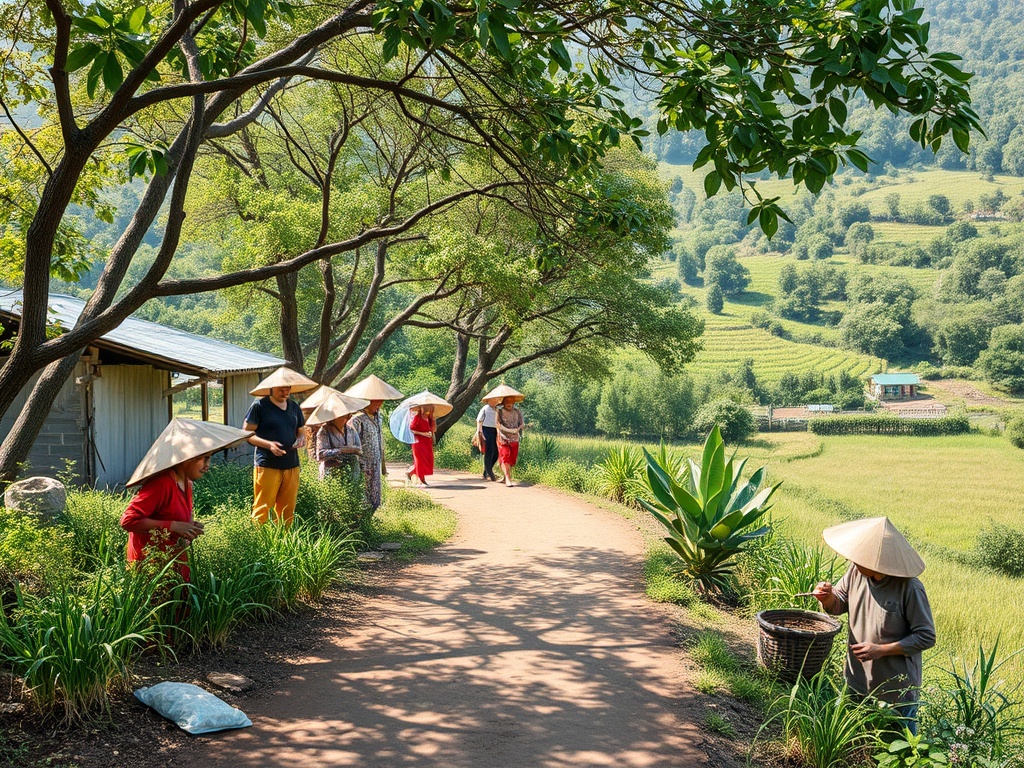
Across the globe, local communities are stepping up as powerful agents of transformation in the tourism sector. No longer passive participants, they are now the **innovators and protectors** of their environments, creating immersive, eco-friendly travel experiences that benefit both visitors and residents alike.
From remote villages in the mountains to coastal towns, these communities are proving that **sustainable tourism is not only possible—it’s thriving** when led by those who know the land best.
Grassroots Innovation in Action
Local initiatives are at the heart of the green tourism movement. These are not top-down strategies, but rather **homegrown solutions** tailored to specific environmental and cultural contexts.
Examples of Community-Led Eco-Tourism:
- Eco-guided nature walks led by indigenous guides who share ancestral knowledge and environmental wisdom.
- Renewable energy-powered lodges built with sustainable materials and managed by local cooperatives.
- Farm-to-table culinary tours that celebrate local agriculture while reducing carbon footprints.
These initiatives not only reduce environmental impact, but also **create meaningful employment** and strengthen cultural identity.
Technology Meets Tradition
One of the most exciting aspects of this movement is the blend of **modern green technologies** with traditional ways of life. Solar-powered water systems, compost toilets, and electric transport are being introduced without disrupting the cultural fabric of the communities.
In many cases, local youth are being trained in sustainable technologies, allowing them to stay in their hometowns while contributing to a forward-thinking economy. This **intergenerational collaboration** ensures that both heritage and innovation are preserved and celebrated.
Why It Matters
Beyond the environmental benefits, community-led sustainable tourism offers:
- Authentic travel experiences rooted in respect and connection.
- Economic resilience for rural and underrepresented regions.
- Increased awareness among travelers about global ecological challenges.
By supporting these initiatives, travelers become part of a larger mission—one that values people, planet, and cultural integrity equally.
How the Money Actually Flows: Three Working Models
“Community-led” is used loosely, so it helps to look at models where the ownership structure is written down and the cash can be followed.
Namibia’s communal conservancies. Since 1996, rural residents on communal land can register a conservancy, elect a committee, and hold the legal right to benefit from wildlife and tourism inside its boundaries. There are now more than eighty of them, covering roughly a fifth of the country. A lodge operator who wants to build inside a conservancy signs a joint-venture agreement: typically a lease or bed-night levy paid to the conservancy, employment quotas, and a fixed contract term after which the buildings revert to the community. Conservancies must publish annual financial reports and hold general meetings where members vote on how income is spent — game guards, school bursaries, cash dividends, or drought relief for cattle. It is not perfect; income is uneven between conservancies near Etosha and those in the far north-east, and committee capture by a few families happens. But the accounts exist, which already puts it ahead of most “we give back” marketing.
Nepal’s Annapurna Conservation Area. Every trekker pays an entry permit of about NPR 3,000 (roughly USD 22), and that money is managed through local committees rather than the central treasury. Villages such as Ghandruk run their own lodge management committees that set a common menu and price list, so lodges compete on quality instead of undercutting each other into poverty. Committees fund micro-hydro plants, kerosene depots to reduce firewood cutting, and trail maintenance. What a visitor sees on the ground: identical laminated menus in every teahouse, solar showers with a posted price, and signs asking you not to request wood fires.
Rotation homestays on Lake Titicaca. On the Peruvian islands of Amantaní and Taquile, families take turns hosting visitors through a rota administered by the island council, so income spreads rather than pooling with the two households nearest the dock. Prices are fixed per night including meals, generally in the USD 15 to 30 range, and the community, not the agency in Puno, decides who hosts next. The weakness is on the other side of the contract: agencies often keep the larger share of the package price, and travellers who book direct on the island pay the family more.
What Travellers Can Check on Site
You do not need a development degree to tell a community enterprise from a lodge with a community brochure. A few observable signals:
- Who holds the keys. Ask who owns the building and the land. In a real cooperative or conservancy the answer is specific — a registered association, a village council, a family trust — and usually the person answering is a member.
- Where the managers come from. Count how many of the people making decisions, not just serving meals, are from the area. Lodges that train local guides into head-guide and manager roles say so readily and can name them.
- Posted prices and permits. Fixed community price lists, a permit fee with a stated purpose, and a receipt are good signs. Vagueness about where a “conservation contribution” goes is a bad one.
- Supply chain within walking distance. Eggs, vegetables, bread and building repairs bought from neighbours mean money circulates. A cold room full of imported produce in a village with farms suggests it does not.
Where possible, book the community-run element directly, even if you book the rest through an agency. The difference in what the host family receives can be a factor of two or three.
Where These Projects Struggle
Honest coverage means naming the recurring failure modes. The first is dependence on a single channel: a village whose visitors all arrive through one tour company loses its bargaining power and, when that company changes its route, its income. The second is leakage: studies of package tourism in some island economies find that well over half the price never reaches the destination at all, going to airlines, foreign-owned hotels and imported goods. Community models reduce leakage but do not eliminate it, especially where the lodge is locally run but the booking platform takes a large commission.
The third is volunteer distortion, where short-term visitors displace paid local labour or, worse, create demand for orphanage visits and staged poverty. Reputable community programmes now refuse unskilled construction volunteers and orphanage tours outright. If a programme still sells them, treat everything else it says with caution.
None of this argues against community-led tourism; it argues for the versions with committees, minutes and receipts — the parts that are hard to fake.
Looking Ahead
The future of tourism is being written by the very communities travelers seek to discover. Their leadership is not only inspiring, it’s essential. With **grassroots passion and global awareness**, the shift towards a more sustainable tourism industry is gaining unstoppable momentum.
As more travelers seek responsible ways to explore the world, local communities will continue to illuminate the path forward—with creativity, care, and a deep-rooted love for their land.