
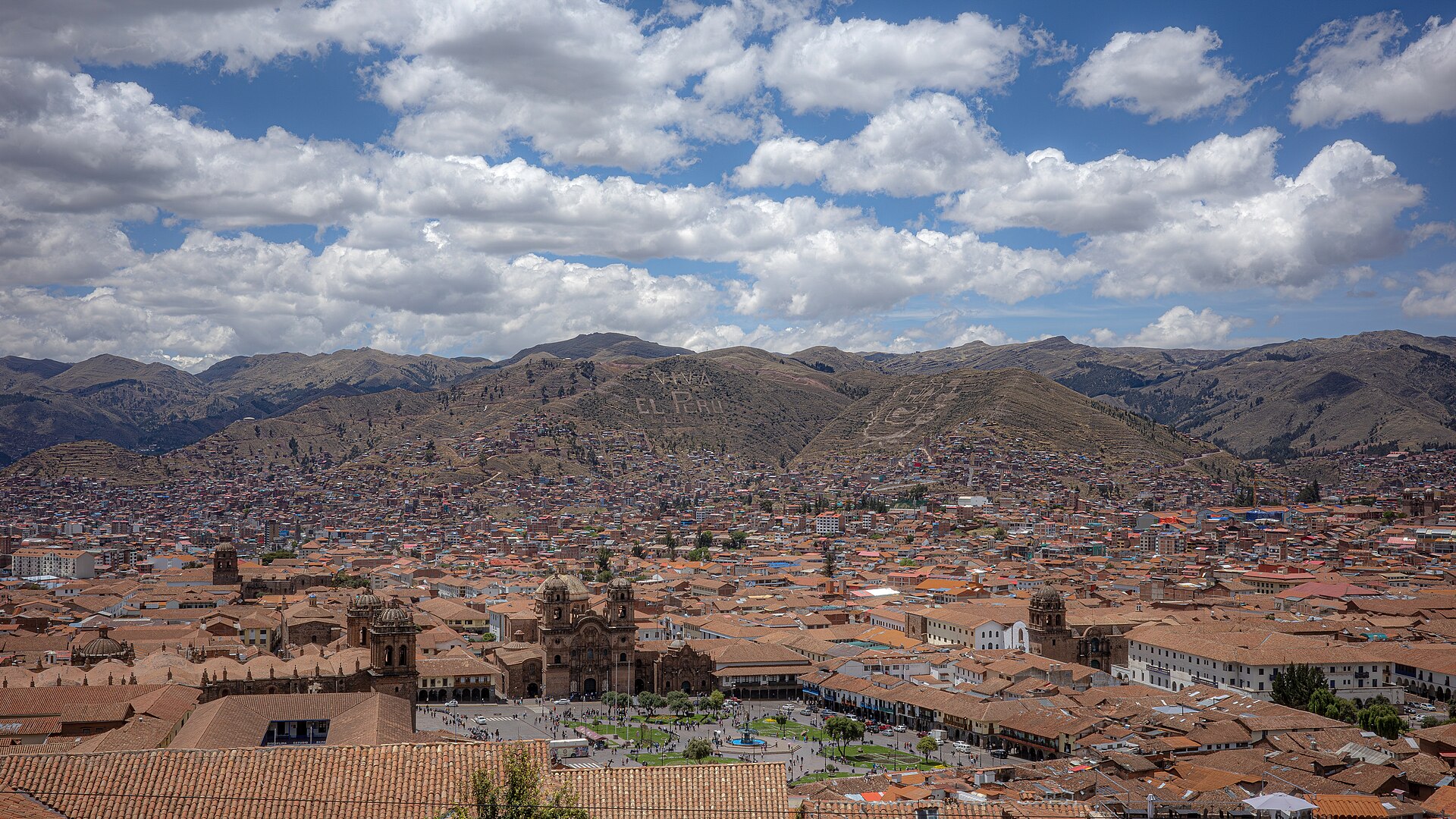
Between Cusco and Machu Picchu, the Urubamba valley has become one of the most visited rural areas in South America, and “community tourism” is now sold from almost every agency window in Cusco. Homestays, weaving demonstrations, a lunch cooked in an earth oven, a Quechua welcome ceremony. Some of these experiences are owned and run by the villages that host them and return most of the money to families there. Others are packaged by city operators who pay a community a small fee per bus and keep the rest. From the visitor’s seat, the two can look identical. This article is about how to tell them apart and what to expect when you do.
What community-based tourism means in the valley
The term describes tourism where the community, usually organised as an association or through the existing communal structure that governs land and water, owns the activity, sets the rules and distributes the income. In the Sacred Valley, this typically means a rotation of host families, a shared fund for the association, a fixed price list, and a governing assembly that decides how many visitors are acceptable. The strongest examples are in the side valleys and on the high slopes above the main road, where potato-farming and weaving communities have organised over the past two decades with support from local non-governmental organisations and, in some cases, the regional government.
What it does not mean is a village that receives visitors. Being visited is not the same as running tourism. The distinction matters because the income figures differ by an order of magnitude. Studies of the valley suggest that in an operator-controlled arrangement, the community may receive under ten percent of what the visitor pays, while in a community-owned homestay programme, well over half stays in the village.
Following the money
You will not be handed a spreadsheet, but you can ask questions that reveal the structure.
- Who sets the price? In a community-run programme, there is a price list decided by the association, and the same price is quoted whether you book through an agency or arrive on your own. If an agency quotes one price and a village contact quotes something wildly different for the same activity, the gap is the agency’s margin.
- How are host families chosen? A rotation system, where families take turns hosting, is a strong sign of community control. A single family that hosts every group and has built an extension is a private business, which is fine, but it is not community tourism and should not be sold as such.
- Is there a communal fund? Ask what the fund has paid for. The answer should be specific: a water tank, school materials, a communal kitchen, a greenhouse.
- Can you pay the community directly? Many associations accept payment at the village. An agency that insists all money passes through its office is not necessarily dishonest, but the arrangement makes it easy to withhold.
- Who guides? Community guides, trained and certified through regional programmes, versus a city guide who translates for the community. Both may be present; the community guide should be paid, not just present.
What the experience is actually like
The reality is quieter than the brochures. A homestay in a village at 3,600 metres means a simple room, often with adobe walls and a corrugated roof, a shared outdoor bathroom that may be cold, and meals built around potatoes, quinoa, broad beans and soup. It also means participating in the day: walking to the fields, herding, helping with a meal, watching wool being dyed with plants, lichen and cochineal, and spending an evening with people who speak Quechua first and Spanish second. Nights are cold and the altitude is real.
The demonstrations are where the honest trade-off sits. Weaving displays and welcome ceremonies exist because visitors want to see them, and the villages have made a choice to perform parts of their culture for income. That is not fake, but it is staged, and the more honest programmes are open about it. The alternative, tourists wandering unannounced into a working village, is worse for everyone.
Prices and timing
- Day visit with lunch and a weaving demonstration: around 25 to 60 US dollars per person through a community-run association, more through Cusco agencies that add transport and a guide.
- Homestay, one night with meals and activities: around 40 to 90 dollars per person, of which a community programme typically returns the majority to the family and the fund.
- Multi-day treks with community lodges or camps: 100 to 250 dollars per person per day, depending on porter arrangements and group size. Porter welfare regulations exist in the region; ask whether the operator follows them and what porters are paid and carry.
The dry season from May to September is the busiest and the most comfortable. The wet season brings green fields, empty villages and daily rain. Late April and October are the reasonable compromise.
Common mistakes and honest limits
The most common visitor mistake is to treat gifts as generosity. Sweets and pens handed to children create begging and undermine the association’s own decision on how income is shared. If you want to give, give to the communal fund. The second is photographing people without asking; in the valley this is a live grievance, and paying someone to pose is exactly the transactional relationship that community tourism was set up to replace. The third is booking a “community” experience through the cheapest counter in Cusco and hoping. Cheapest is nearly always the operator-controlled version.
The honest limits are that community tourism cannot absorb unlimited visitors, that money can strain relationships within a village as well as help it, and that the visitor cannot fix any of this by choosing carefully. What you can do is make sure your money goes to the structure the community built rather than around it.
Who benefits, then
When it works, host families earn an income that keeps them on their land instead of moving to the city, young people train as guides, and the association funds infrastructure the state has not. When it does not, the community receives a bus-load of visitors, a fee that covers the lunch, and photographs of their children on other people’s social feeds. The difference is in the structure, and the structure can be checked with a few questions before you pay.