
The fence had been a line of cedar posts and wire running north to south across a grazing block the size of a small town. Now it is a row of grey stumps, and on my first morning the zebra crossed it without breaking stride. I had come to a community conservancy on the edge of the Maasai Mara ecosystem to see how the model works up close, and to test my own scepticism about whether tourism money really reaches the people whose land this is.
How a conservancy works, roughly
Most of the land around the national reserve in southern Kenya is not government land. It was subdivided in the 1990s and 2000s into private parcels, often 60 to 100 hectares each, owned by individual Maasai families. Fences went up, as they do when people own something and want to keep it. Wildlife that had moved between the reserve and the wet-season grazing to the north started running into wire.
The conservancy model, which took off in the late 2000s, is a lease agreement. Hundreds of landowners agree to pool their parcels, take down internal fences and limit settlement and grazing inside the block. In return, a handful of tourism operators pay a fixed monthly rent per hectare, whether or not any tourist turns up. That last point matters more than it sounds. It shifts the risk of an empty season from the family onto the camp.
The conservancy I stayed in covers a little over 20,000 hectares and is leased from roughly 700 landowners, according to the manager who walked me through it with a laminated map. Payments are made monthly by bank transfer. He told me the figure was around 4,000 to 5,000 Kenyan shillings per hectare per year, which for a typical parcel works out to a few hundred US dollars a month. Not a fortune. Also not nothing in a place where the alternative is subsistence cattle on degraded ground.
Three nights, one camp
The camp had eight tents. Canvas, proper beds, a bucket shower filled on request with water heated over a fire. Solar panels ran the lights and charged the radios in the vehicles; the fridge was gas. There was no generator, which I noticed most at night, when the only sounds were hyena somewhere behind the kitchen and the wind moving through the whistling thorn.
The rate was about 550 US dollars per person per night, full board, including two game drives a day and the conservancy fee. That is the mid-range for this kind of camp; I saw others advertised from around 350 and up past 1,000. The conservancy fee alone, which goes to the landowners’ association rather than the camp, is typically 100 to 150 dollars per person per night. I asked to see it as a line item and they showed me.
We drove out at six each morning. The first day, cattle. Hundreds of them, walking east with two herders and a dog, through a plain where twenty minutes earlier we had watched a lioness. The guide, who grew up two valleys over, explained that grazing is not banned in the conservancy. It is scheduled. Herds move through designated blocks on a rotation that leaves grass for wildlife and rests the soil. The old fences were not just walls for animals; they were walls for a whole system of managing land that had worked for centuries before subdivision.
The second day, elephants at the river where a fence line used to end. The third, a cheetah on a termite mound at dawn, and I will not pretend I was thinking about land tenure at that moment.
The parts that made me uneasy
Everything I have written so far is what the camp wanted me to see, and it is also true. The unease is elsewhere. Lease payments go to landowners, which means to whoever holds the title, which in most cases means men. Women told me, through the guide, that money reaches the household but the decisions about it do not always include them. Some conservancies now pay into joint accounts. This one was working on it.
There is also the question of who does not own land. Subdivision created owners and, by definition, non-owners. Younger people, herders working for others, families who sold early and cheaply. The conservancy employs about 60 people from the surrounding area, from rangers to kitchen staff, but a bed at 550 dollars a night is an economy that most people around it can only enter as employees.
And then the obvious one. I flew to Nairobi. That flight, roughly 1.5 tonnes of CO2 return from Europe, dwarfs anything the solar panels save. The camp is low-impact. My visit was not. I do not think the honest response is to stay away, because the lease payments only exist if people come. But I did stop using the phrase eco-safari in my head somewhere around the second evening.
What the fence coming down actually did
The manager showed me survey figures. Since the internal fences came down and grazing was scheduled, wildlife counts inside the block have risen sharply, and lion numbers in the wider northern conservancies are now among the highest densities recorded anywhere. Grass cover has recovered on the rotational blocks. The landowners’ association has funded a dispensary and bursaries for secondary school.
Against that, human-wildlife conflict has not disappeared. More lions means more livestock taken at night. The conservancy runs a compensation scheme, paid from the tourism rent, and reinforced bomas of chain-link have cut losses. But a herder who loses three cows is not consoled by a density statistic.
Practical takeaways
- Ask for the conservancy fee as a separate line. A camp that cannot tell you what goes to the landowners is not one I would trust on the rest.
- Budget 350 to 1,000 US dollars per person per night for a conservancy camp, all inclusive; national reserve lodges can be cheaper but you are not paying land rent to anyone.
- Stay three nights minimum. Two-night stays are mostly transfers; the third day is when you see the grazing rotation and not just the animals.
- Go in the green season if you can. April to June rates drop by a third or more, the plains are empty of vehicles, and the rent to landowners is the same.
- Combine it with something else in Kenya. If the flight is the biggest cost, a three-night safari on its own is the worst ratio of impact to time. Make the trip longer and slower.
Leaving through the gap in the fence
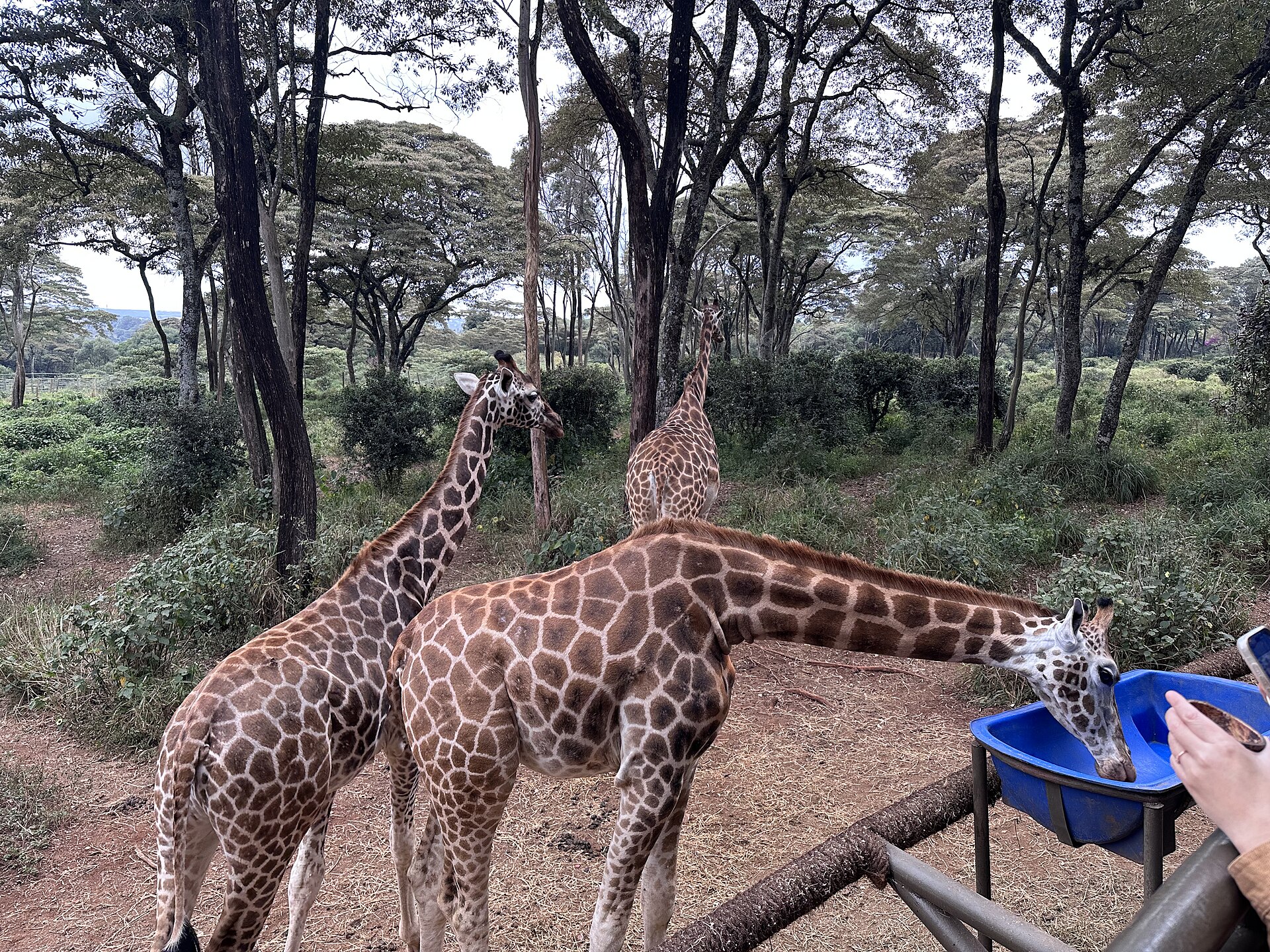
On the last morning we drove out the same way we had come in, past the line of grey stumps. Two giraffe were standing exactly where the wire used to be. The model behind that image is not simple, not free of losers, and not carbon-neutral by any stretch. It is a lease, negotiated between people who need income and people who want to see lions, and it holds only as long as both sides keep paying. That is less romantic than the brochure. I found it more convincing.