

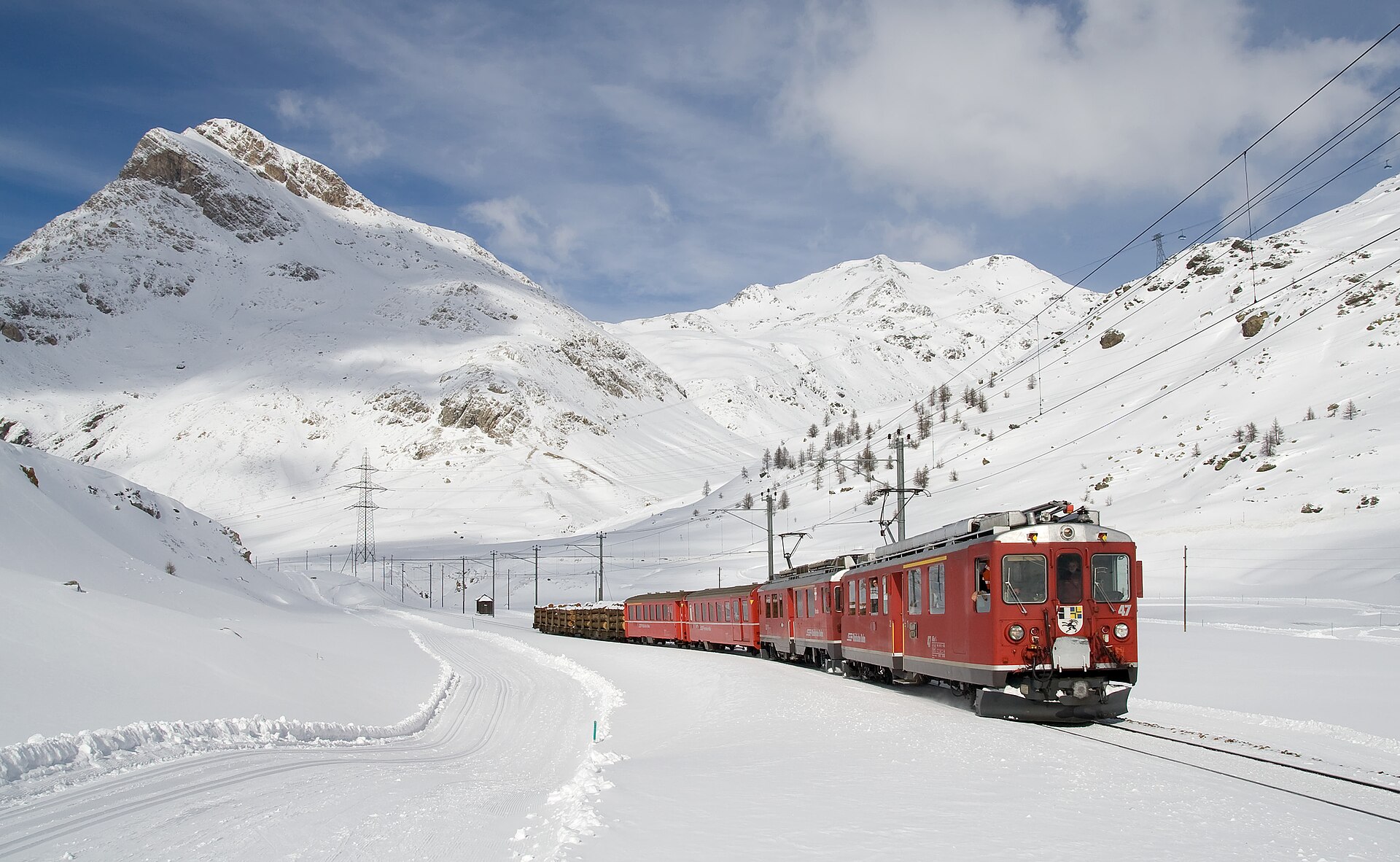
The Alps are one of the easiest places in Europe to reach without flying, and Paris is one of the easiest places to start. Between them lie a high-speed line, a couple of regional railways that climb into the mountains at a pace that lets you watch the geology change, and a handful of towns where breaking the journey is the point rather than a nuisance. This is a route for people who want to spend a week getting somewhere rather than two hours getting there, with realistic costs, honest timings and the mistakes that catch first-time slow travellers.
The shape of the route
The straight version takes a few hours: a high-speed train from Paris to Geneva or to Annecy, then a regional connection into the mountains. The slow version stretches that into five to seven days and adds two or three stops. The one described here runs Paris to Dijon, Dijon to Geneva via the Jura, Geneva along the lake to Montreux, up the narrow-gauge line to the Bernese Oberland, and finishes at Interlaken with rail-only access to the car-free villages above it.
Every leg runs on regular timetabled services. No special tourist trains are needed, though one or two exist along the way and are worth knowing about. Everything can be booked as separate tickets, and the pieces can be rearranged: swap Dijon for Lyon, or end in Chamonix instead of the Oberland by taking the Mont Blanc line from the Geneva side.
Leg by leg
- Paris to Dijon, about 1 hour 40 on the high-speed line. Dijon is the stop most people skip, and it is worth a night: a walkable old town, the start of the Burgundy vineyards a short regional ride away, and a covered market that is the place to stock the picnic bag for later legs. Advance high-speed fares run from around 20 to 45 euros; walk-up fares are two to three times that.
- Dijon to Geneva, 2 to 3 hours with one change, via the Jura. The regional line climbs through forested plateau and limestone gorges before dropping to the lake. Cheap, rarely crowded, and the first moment the trip feels like it has left the lowlands. Around 25 to 40 euros.
- Geneva to Montreux, about 1 hour along Lake Geneva. Frequent trains hug the north shore past the Lavaux vineyard terraces. Take a right-hand window seat heading east. Swiss fares are priced per kilometre and are not cheap: roughly 25 to 35 francs full price, about half with a half-fare card.
- Montreux to Zweisimmen and on to Interlaken, about 3 hours. A narrow-gauge climb from lake level to over 1,000 metres and down again through pasture country. Panoramic carriages exist and cost a supplement; the ordinary carriages have the same windows and cost nothing extra. Around 60 to 80 francs full fare for the whole stretch.
- Interlaken into the valleys. From here, cog railways and regional trains reach Grindelwald, Lauterbrunnen and the car-free villages of Wengen and Muerren. Prices climb steeply above the valley floor; the higher the terminus, the more each kilometre costs.
What it costs, honestly
A budget version of this week, with advance French tickets, a Swiss half-fare card, hostel or simple guesthouse beds and picnic lunches, comes in at around 600 to 900 euros per person for six nights including transport. A comfortable version with mid-range hotels, a panoramic supplement or two and restaurant dinners runs 1,400 to 2,200 euros. Switzerland is the expensive half; the French legs are cheap by comparison.
Against that, the transport emissions are a small fraction of a Paris to Geneva flight plus a rental car, and the money spent stays largely in small towns rather than at an airport. Whether that is worth the extra days is a personal question; the point is to know the numbers rather than assume the train is either always cheaper or always dearer.
Booking: what actually works
French high-speed tickets are dynamically priced and cheapest three to eight weeks ahead. Swiss tickets are fixed price, so there is no advantage in booking early apart from securing a seat in the panoramic carriages in summer. The half-fare card, valid for a month for visitors, pays for itself on this route within about two days of travel. Buy the two national systems separately rather than through a third-party site that adds fees and cannot rebook you if a connection is missed.
- Allow proper connection times. Fifteen minutes is fine within Switzerland, where the network is built around timed connections. Give yourself an hour crossing between the French and Swiss systems in Geneva, where you may change platforms and pass through a customs area.
- Carry paper or offline copies. Mobile coverage in the Jura gorges and some Alpine valleys is patchy, and inspectors do not care why your ticket will not load.
- Travel with one bag you can lift onto a rack. Narrow-gauge carriages have limited space, and Swiss stations offer a luggage-forwarding service that is worth the fee if you are carrying skis or a bicycle.
Common mistakes
The first is over-scheduling. People plan a stop every night and spend the week packing. Two or three bases with day trips by train are far more restful and cost about the same. The second is chasing named scenic trains and ignoring the ordinary services that run the same tracks; the view is identical. The third is arriving in Switzerland without the half-fare card and paying full fare for every mountain railway, which quickly adds hundreds of francs.
A smaller mistake is travelling in July and August and expecting solitude on the Oberland line or in the Lauterbrunnen valley. Late May, June and September give the same scenery, cheaper beds and half the crowd. Above 2,000 metres, the shoulder seasons also mean some lifts and trails are closed, which is the honest trade-off.
Whether it is worth it
If the goal is to be in the Alps by lunchtime, the fast train and a single connection will do it. If the goal is to see the country between Paris and the mountains change under you, to eat in Dijon and Montreux and a valley village on consecutive days, and to arrive without a car to park, this is one of the best-served slow routes on the continent. The trains are ordinary, the timetables are reliable, and the only thing you need to bring is the willingness to spend the days rather than save them.