

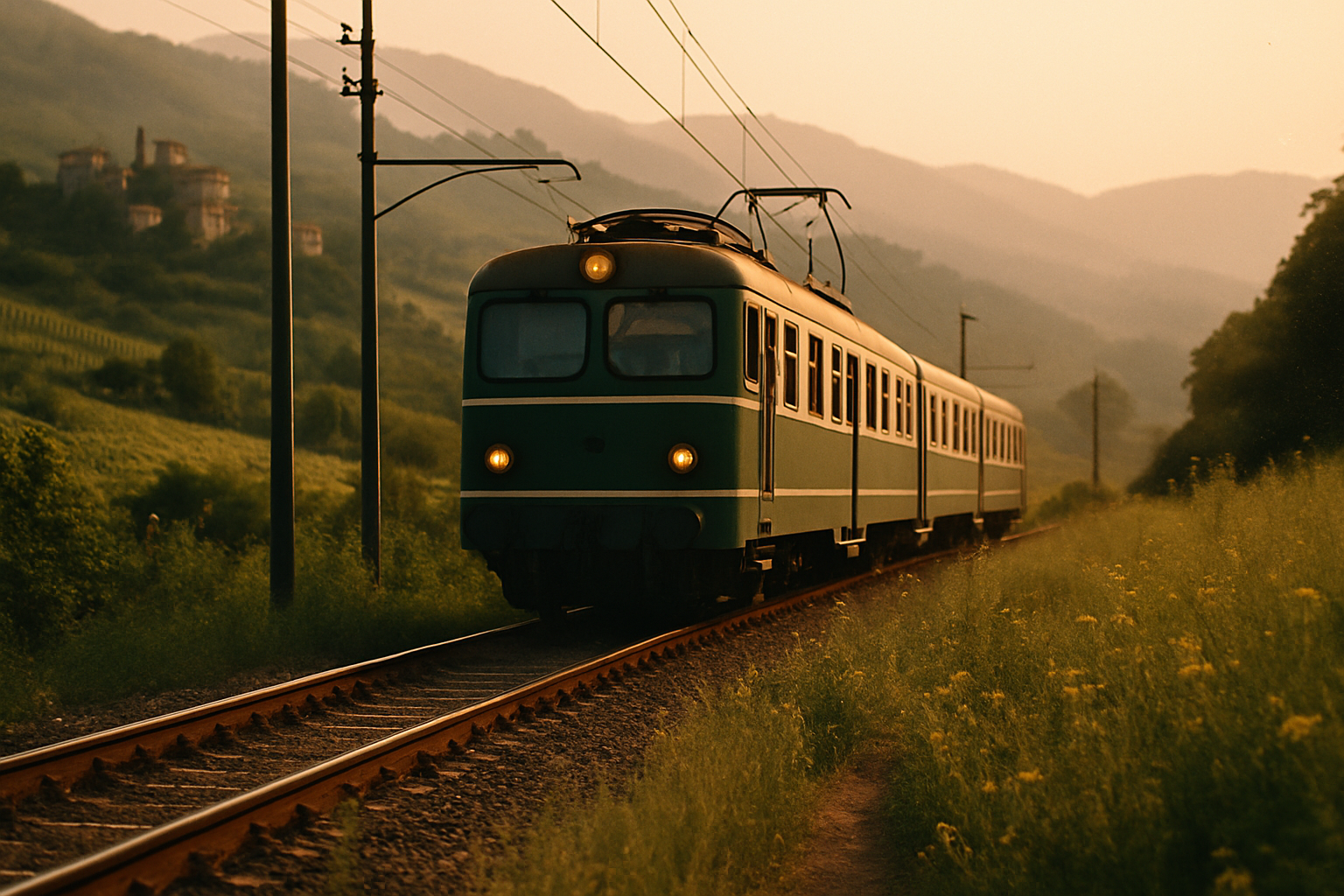
Key takeaway: In 2026, slow rail travel cuts CO2 emissions substantially compared to flying while revitalizing rural economies. By choosing regional lines like the Douro Valley or Balkan tracks, travelers bypass overtourism and support local heritage. Rail journeys produce far less CO2 than flying, making trains the ultimate sustainable choice for conscious exploration.
Modern rail networks in Europe emit significantly less carbon than short-haul flights, yet many travelers still prioritize speed over the quality of the journey. We often rush through airports only to miss the gradual shift in architecture and culture that defines the continent.
This article explores how slow train travel in Europe offers a deeper immersion into local heritage while significantly reducing your environmental footprint. We will look at the best scenic routes and the logistics needed to master cross-border rail travel.
- Why Slow Train Travel in Europe Matters in 2026
- 4 Scenic Routes That Redefine the Journey
- Mastering the Logistics of Cross-Border Rail
- Maximizing Comfort and Local Impact on the Tracks
Why Slow Train Travel in Europe Matters in 2026
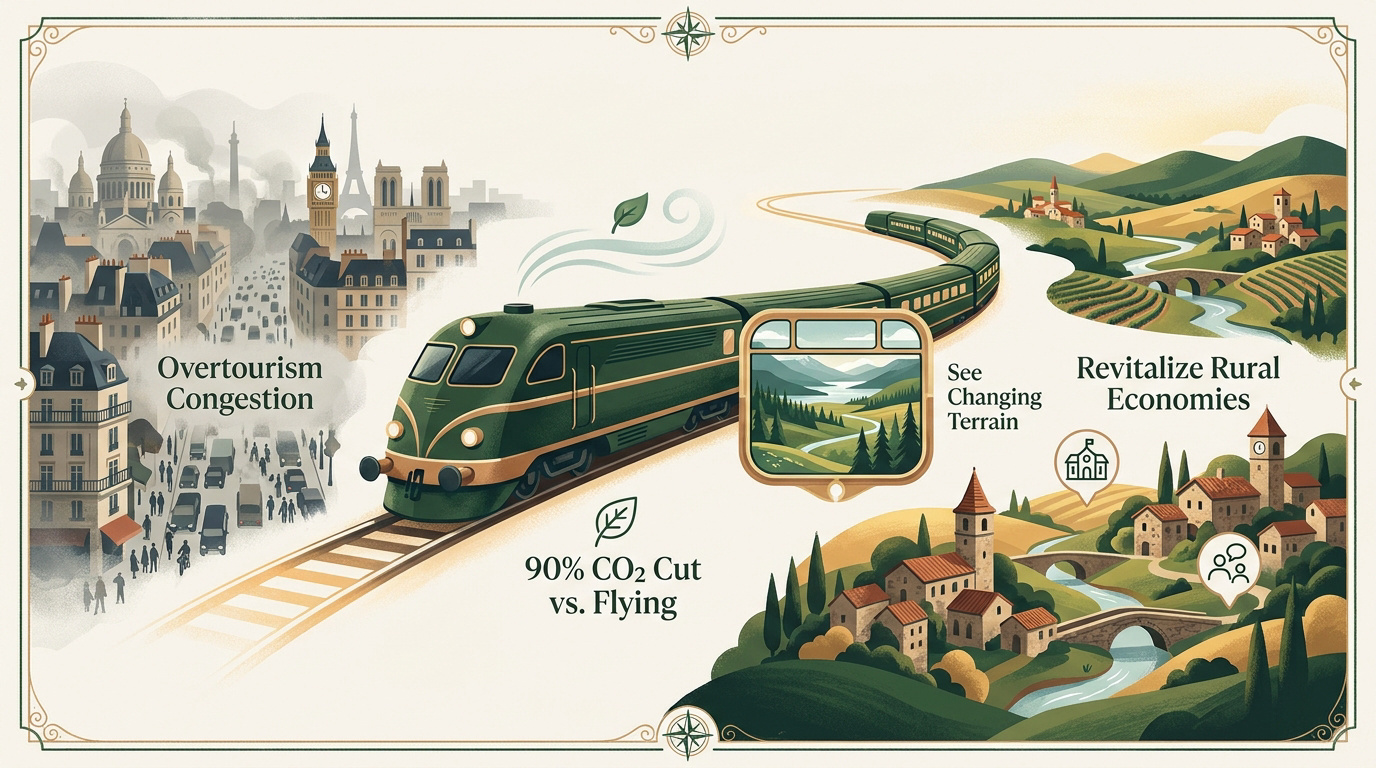
European rail travel in 2026 cuts carbon substantially compared to flying. It shifts focus to secondary hubs like Coimbra or Bar, revitalizing rural economies while bypassing the unsustainable congestion of major capitals.
The environmental logic is undeniable, starting with the massive reduction in emissions seen across the continent’s electrified networks.
Cutting carbon without losing the view
Short-haul flights generate significantly more carbon per passenger than high-speed trains. Modern rail networks utilize decarbonized electricity, making them incredibly efficient. Flights generate far more CO2 per kilometer than trains, which run on increasingly decarbonized electricity across Europe’s electrified networks.
We are seeing a massive cultural shift. Travelers now embrace railway pride instead of flight shame. It is about valuing the journey. The view from a panoramic window has become more prestigious than reaching a destination quickly.
Slowing down creates a deeper connection with geography. You observe the changing terrain, from jagged mountains to dense forests. It is a sensory experience. You escape the sterile environment of plastic trays and clouds to see real life.
Choosing tracks is a political statement. It protects our planet’s future.
Fighting overtourism through regional rail
Secondary lines distribute wealth to forgotten areas. Most tourists stay in congested capitals, but regional rail supports quiet villages. Money goes to family-run shops. These small businesses actually need your support to survive and thrive.
Preserving local heritage becomes possible with rail. Trains stop in towns featuring ancient architecture and unique traditions. These places stay authentic. They are not ruined by the massive crowds typically found near major international airports.
The social impact is profound. You interact with local commuters daily. It creates human connections that flying simply cannot offer.
Capitals often feel like museum cities. Small stops offer a raw glimpse of European life. This immersion feels earned and real.
4 Scenic Routes That Redefine the Journey
Moving from the “why” to the “where,” certain tracks offer visual rewards that no flight path could ever emulate.
The Bernina Express: Alpine heights and heritage
The Landwasser Viaduct stands as a limestone marvel. Its six arches curve sharply, guiding the train 65 meters above the valley. Precision engineering meets raw nature here.
Winter transforms the scenery into frozen glaciers and hushed white peaks. Summer brings a different magic. Lush green meadows and grazing cows replace the snow under bright sun.
Reaching one of the highest points of any adhesion-only railway in the Alps is a world-class feat. This climb happens without a cogwheel. It remains a masterpiece of early 20th-century railway design.
Coastal wandering on the Linha do Douro
The tracks hug the Douro River with impressive intimacy. You glide past steep terraced vineyards. This region has produced world-famous port wine for centuries.
Stations act as small museums with blue azulejo tiles. These ceramics depict traditional rural life and harvest scenes. They turn every stop into a cultural history lesson.
Rail travel serves as the historical lifeline for these estates. It connects remote, sun-drenched vineyards to the wider world.
Balkan tracks: The Belgrade to Bar adventure
This route conquers Montenegrin canyons through 435 bridges and 254 tunnels. It is slow, wild, and rugged. Travelers seeking authentic, unpolished paths will find their sanctuary here.
The old-school carriages foster a unique social vibe. Passengers often share food and local stories during the climb. It feels like a gritty, shared human adventure.
Leaving the mountains for the Adriatic coast is a relief. The sudden sight of blue water feels like a hard-won victory for the soul.
Mastering the Logistics of Cross-Border Rail
Seeing the sights is the easy part, but stitching these borders together requires a bit of tactical thinking.
Rail passes versus point-to-point tickets
Evaluate Interrail and Eurail options. These passes offer ultimate flexibility for long trips. They work best if you plan to visit multiple countries without a fixed daily schedule or route.
Advice on booking early. For specific high-speed routes, advance tickets are much cheaper. If you know your dates, booking three months out saves a fortune compared to last-minute fares.
Summary of choice. Balance the freedom of passes against the savings of fixed, early-bird fares. Your decision depends on your itinerary.
Digital tools for real-time schedule tracking
Recommend mobile apps. Use the DB Navigator or Rail Planner for reliable data. These tools track delays and platform changes across most European operators in real-time for accuracy.
Managing tight connections. Digital planners show station maps for major hubs. Knowing exactly where your next platform is can save you from a stressful sprint between distant train tracks.
Stay updated. Always check the local operator app for the most accurate, last-minute track assignments. Local data often beats global aggregators.
Handling transfers between multi-operator networks
Navigating station layouts. Large hubs like Paris Nord or Berlin Hbf are complex mazes. Give yourself at least twenty minutes between trains to find the right hall or platform.
Discuss passenger rights. The HOTNAT agreement helps if you miss a connection. Most carriers will put you on the next train if the delay was their fault during transit.
Keep your proof. Always have your stamped ticket or digital log ready to show the conductor. Evidence is vital for a smooth journey.
Maximizing Comfort and Local Impact on the Tracks
Once the logistics are settled, the focus shifts back to the quality of the time spent moving across the map.
Luggage strategies for multi-day itineraries
Packing for narrow aisles requires strategy. Use soft-shell bags instead of hard suitcases. They fit better in overhead racks and are easier to carry up the steep stairs of older regional trains. Flexibility is your best friend here.
Onboard amenities and dining vary greatly. Bring your own reusable water bottle and snacks. While dining cars are social, having your own supplies ensures you never go hungry during delays. It keeps you independent and fueled.
Socializing on board happens naturally. The shared table in a carriage is a great place to meet locals. Be open to conversation but respect the quiet zones when needed. A simple nod often starts a great story.
Supporting remote economies through station stops
Use station-side markets for food. Buy your lunch from local vendors near rural stops. This keeps your travel budget within the community instead of feeding global fast-food chains. Authentic flavors beat generic burgers every time.
Small-scale accommodation offers better value. Stay in guesthouses near stations rather than central hotels. These spots are often cheaper and offer a more authentic welcome. It also makes early morning departures much easier to manage. No stress involved.
Disconnecting from devices is vital. Embrace the slow travel philosophy by putting the phone away. Watching the world go by is the best way to truly decompress. Slow Train Travel in Europe: Lower Emissions and Higher Immersion starts with looking out the window.
Choosing tracks over runways cuts carbon dramatically while revitalizing rural economies. By mastering cross-border logistics and embracing regional rail, you transform transit into a deep cultural immersion. Secure your advance tickets now to turn your 2026 journey into a sustainable masterpiece of discovery. The tracks are calling; don’t just travel, belong.
FAQ
How much can I actually reduce my carbon footprint by choosing European trains over planes?
Opting for the rails leads to a massive reduction in environmental impact. For instance, according to the European Environment Agency (2023), taking the high-speed TGV emits dramatically less CO2 per passenger-kilometre than the equivalent short-haul flight, making flying far more polluting than modern electric rail networks.
Even when using regional TER trains, which may include non-electrified lines, the emissions remain significantly lower than air travel. Choosing the tracks is a powerful political statement for the planet, as electric trains leverage low-carbon energy mixes to provide the most efficient transport across the continent.
How does slow rail travel help support local economies in rural Europe?
Slow train travel acts as a vital lifeline for regional economies by distributing tourist wealth beyond congested capitals. When you use regional lines, your travel budget supports small family-run shops and local vendors located near quiet station stops, rather than global fast-food chains found in major airports.
Staying in guesthouses near rural stations further revitalizes these communities. These authentic accommodations are often more affordable and ensure that the economic benefits of tourism reach quiet villages and remote areas, helping to preserve local heritage and ancient architecture that might otherwise be overlooked.
What makes the Bernina Express such a unique engineering feat?
The Bernina Express is world-renowned for its incredible climb to a remarkable altitude for an adhesion-only railway in the Alps, without the use of a cogwheel. A highlight of this UNESCO World Heritage route is the Landwasser Viaduct, a 65-meter-high limestone structure where the train curves over six stone arches directly into a mountain tunnel with absolute precision.
This journey offers a sensory connection to the changing terrain, shifting from the white silence of frozen glaciers in winter to bright green meadows in summer. It is a masterclass in railway design that allows travelers to appreciate the sheer scale of the Alps at a contemplative pace.
Is the Belgrade to Bar train route suitable for adventure seekers?
Absolutely, the Balkan tracks are perfect for those who prefer wild, rugged experiences over polished tourist trails. This route crosses the Montenegrin canyons, including the Tara Canyon, the deepest in Europe, and traverses over 435 bridges and 254 tunnels through the Dinaric Alps.
The experience is defined by its old-school carriages and social vibe, where travelers often share stories and food. Arriving at the Adriatic coast after navigating these difficult mountain passes feels like a hard-won victory, offering a raw glimpse of European life that feels truly earned.
Should I choose an Interrail pass or buy individual point-to-point tickets?
The choice depends on your need for ultimate flexibility versus cost savings. Interrail and Eurail passes are ideal for long, multi-country itineraries without a fixed daily schedule. However, for specific high-speed routes, booking advance tickets three months in advance can save a significant amount of money.
If you are a resident of Europe, the Interrail pass offers better rates, while Eurail is designed for non-European residents. Always balance the freedom of a flexible pass against the potential savings of fixed, early-bird fares for a well-planned journey.
What happens if I miss a connection while traveling between different rail operators?
If you miss a connection due to a delay, the HOTNAT (Hop on the next available train) agreement between Railteam members allows you to take the next available train for free, subject to seat availability. This applies to major hubs and high-speed services like TGV, ICE, and Eurostar.
Additionally, the Agreement on Journey Continuation (AJC) helps ensure you reach your destination if an international delay occurs. Always keep your stamped ticket or digital log ready to show the conductor, and visit the station service desk to authorize your new itinerary.
What is the best way to pack for a multi-day European rail trip?
Efficiency is key when navigating narrow aisles and steep stairs. Use soft-shell bags instead of hard suitcases, as they fit much better in overhead racks. It is also wise to carry a reusable water bottle and your own snacks to ensure you stay comfortable during potential delays.
Embrace the slow travel philosophy by packing versatile clothing and items for decompressing, like a good book. By managing your luggage strategically, you can focus on the view from the window and the social interactions at the shared tables in the carriage.
FAQ
How much can I actually reduce my carbon footprint by choosing European trains over planes?
Opting for the rails leads to a massive reduction in environmental impact. For instance, traveling from Toulouse to Paris by high-speed TGV emits only 1.4 kg of CO2 per passenger, compared to a staggering 79 kg for the same journey by plane. This means flying can be up to 56 times more polluting than modern electric rail networks.
Even when using regional TER trains, which may include non-electrified lines, the emissions remain significantly lower than air travel. Choosing the tracks is a powerful political statement for the planet, as electric trains leverage low-carbon energy mixes to provide the most efficient transport across the continent.
How does slow rail travel help support local economies in rural Europe?
Slow train travel acts as a vital lifeline for regional economies by distributing tourist wealth beyond congested capitals. When you use regional lines, your travel budget supports small family-run shops and local vendors located near quiet station stops, rather than global fast-food chains found in major airports.
Staying in guesthouses near rural stations further revitalizes these communities. These authentic accommodations are often more affordable and ensure that the economic benefits of tourism reach quiet villages and remote areas, helping to preserve local heritage and ancient architecture that might otherwise be overlooked.
What makes the Bernina Express such a unique engineering feat?
The Bernina Express is world-renowned for its incredible climb to 2,253 meters without the use of a cogwheel. A highlight of this UNESCO World Heritage route is the Landwasser Viaduct, a 65-meter-high limestone structure where the train curves over six stone arches directly into a mountain tunnel with absolute precision.
This journey offers a sensory connection to the changing terrain, shifting from the white silence of frozen glaciers in winter to bright green meadows in summer. It is a masterclass in railway design that allows travelers to appreciate the sheer scale of the Alps at a contemplative pace.
Is the Belgrade to Bar train route suitable for adventure seekers?
Absolutely, the Balkan tracks are perfect for those who prefer wild, rugged experiences over polished tourist trails. This route crosses the Montenegrin canyons, including the Tara Canyon, the deepest in Europe, and traverses over 435 bridges and 254 tunnels through the Dinaric Alps.
The experience is defined by its old-school carriages and social vibe, where travelers often share stories and food. Arriving at the Adriatic coast after navigating these difficult mountain passes feels like a hard-won victory, offering a raw glimpse of European life that feels truly earned.
Should I choose an Interrail pass or buy individual point-to-point tickets?
The choice depends on your need for ultimate flexibility versus cost savings. Interrail and Eurail passes are ideal for long, multi-country itineraries without a fixed daily schedule. However, for specific high-speed routes, booking advance tickets three months in advance can save a significant amount of money.
If you are a resident of Europe, the Interrail pass offers better rates, while Eurail is designed for non-European residents. Always balance the freedom of a flexible pass against the potential savings of fixed, early-bird fares for a well-planned journey.
What happens if I miss a connection while traveling between different rail operators?
If you miss a connection due to a delay, the HOTNAT (Hop on the next available train) agreement between Railteam members allows you to take the next available train for free, subject to seat availability. This applies to major hubs and high-speed services like TGV, ICE, and Eurostar.
Additionally, the Agreement on Journey Continuation (AJC) helps ensure you reach your destination if an international delay occurs. Always keep your stamped ticket or digital log ready to show the conductor, and visit the station service desk to authorize your new itinerary.
What is the best way to pack for a multi-day European rail trip?
Efficiency is key when navigating narrow aisles and steep stairs. Use soft-shell bags instead of hard suitcases, as they fit much better in overhead racks. It is also wise to carry a reusable water bottle and your own snacks to ensure you stay comfortable during potential delays.
Embrace the slow travel philosophy by packing versatile clothing and items for decompressing, like a good book. By managing your luggage strategically, you can focus on the view from the window and the social interactions at the shared tables in the carriage.
Read next: What Is Ecotourism? A Working Definition and How to Spot the Real Thing