
Ecotourism is one of the most stretched words in travel. Operators apply it to anything involving trees, from a jungle zipline to a hotel with a leaf on its logo. This guide gives you a working definition drawn from established bodies, explains how it differs from related terms, and finishes with checks you can run before you book.
- Ecotourism combines conservation, local benefit and education; nature scenery alone does not qualify.
- It is a niche within sustainable tourism, not a synonym for it.
- Three questions about money, scale and guides reveal most greenwashing.
How is ecotourism defined?
The most quoted short definition comes from the International Ecotourism Society. In its wording, ecotourism means travel to natural areas that protects the environment while improving life for the people who live there. Two outcomes are required together, environmental protection and community benefit. A trip that delivers only one of them falls short.
The UN tourism body spells the idea out in more detail. Its definition describes nature-based tourism in which the main motivation is observing and appreciating nature, along with the traditional cultures found in natural areas. It adds several further features:
- Educational and interpretive content built into the experience.
- Organisation, generally but not always, by specialised operators for small groups, with small, locally owned service providers at the destination.
- Minimal negative impact on the natural and sociocultural environment.
- Economic benefits for host communities and for the bodies managing protected areas, plus alternative jobs and income for local people.
Notice how many of these are things you can check, rather than feelings a brochure can produce. That is the useful part of the definition for a traveller making a decision.
Where does the idea come from?
The concept has been considered an important conservation tool since the 1980s. The Oxford English Dictionary first recorded the word in 1982, describing tourism to areas of ecological interest, typically exotic and often threatened environments, especially to support conservation and observe wildlife, with access controlled to keep adverse effects as low as possible.
In those early years it was a niche interest and usually came at premium prices. As awareness of climate change grew through the 1990s and 2000s, ordinary travellers began asking about the ecological footprint of their holidays, and the label spread well beyond specialists. That popularity is also why the term became so diluted.
Expectations have shifted too. Earlier ecotravellers mostly wanted to reduce harm. Many today want evidence that their trip makes a positive difference, and look for educational content and concrete ways to support the places they visit.
How does ecotourism differ from sustainable and responsible travel?
The three terms overlap, but each points at something different, and mixing them up makes comparison shopping harder.
- Ecotourism is a niche segment focused on conserving natural environments and supporting local people, often through education about natural heritage.
- Sustainable tourism is the wider category. It covers environmental conservation and also the socio-economic stability of destinations as a whole. The global reference standards for it are the GSTC Criteria.
- Responsible travel describes the behaviour and style of an individual traveller rather than a type of product.
In practice, a city hotel with a strong water and waste policy can be sustainable without being ecotourism, because it is not built around nature appreciation. Equally, a small nature tour can be ecotourism on paper while its operator ignores wider sustainability standards. Ask which one a business is actually claiming, and what proof sits behind that claim.
Some definitions are also stricter than others. One researcher, Buckley, is cited as arguing that very few organisations deliver a net gain for the environment overall, so treat any promise of zero impact with suspicion, especially when the trip involves a long flight.
Three practical tests for spotting genuine ecotourism
Definitions are only useful if they translate into questions you can put to an operator. These three tests follow directly from the criteria above.
Where does the money go?
Ask who owns the lodge or tour company and what share of your payment stays in the area. The UN definition expects economic benefits for host communities and for the authorities that manage the natural areas. Locally owned, small providers are the typical pattern. Be wary when land has been bought up by large companies to build hotels, since that can push local communities out of their homes.
Is the scale controlled?
Small groups are a defining feature in the UN description, and for good reason. More visitors can mean soil erosion, habitat loss and heavier demand for food and water. Ask about group size and whether the operator follows rules on how close visitors may approach wildlife, and then follow those rules exactly once you are there.
Who guides, and who gets the jobs?
Guides who are local to the region and knowledgeable are a recurring marker in ecotourism ethics, along with accurate information and marketing that creates realistic expectations. Ask whether local people are employed in the guiding and management roles, or only in the lowest-paid ones. The documented problem in some places is that new jobs went mainly to educated outsiders rather than the people already living there.
An operator who answers all three questions openly, and without hurrying you past them, is a better bet than one who replies with slogans.
Hard or soft ecotourism: which suits you?
Ecotourism covers a wide range of experiences, and it helps to think of it as a spectrum rather than a single product. At one end sit remote trips with basic facilities, small groups and demanding logistics. At the other are day trips with larger groups and comfortable infrastructure. The sources provided here do not set out a formal hard and soft classification, so treat this as a practical way of thinking rather than an official standard.
When choosing a point on that spectrum, weigh a few things:
- Impact per person. Smaller groups and simpler facilities generally put less pressure on a site, but a comfortable day trip run by a local, well-managed operator can still be a sound choice.
- Fitness and tolerance for discomfort. A trip you cannot complete safely helps nobody.
- Your learning goals. If interpretation and education matter to you, ask how much time with a knowledgeable guide is included.
- Getting there. Like most long-distance travel, ecotourism often relies on air transport, which contributes to climate change. A closer destination reached overland can improve the overall footprint of the trip.
Activities themselves are varied: cycling tours, kayaking, nature walks, scuba diving, photography and stargazing all appear in typical lists. Pick the one that matches your interests and the carrying capacity of the place.
Where ecotourism falls short, and what to do about it
Ecotourism has real strengths: it can fund protected areas, create alternative employment, and teach visitors why ecosystems matter. It also carries documented risks, and a good decision accounts for both.
- Greenwashing. As the label becomes more popular, misuse grows. Critics also note that some operators run the same infrastructure and practices as regular tourism under a different name.
- Displacement. In East Africa, roughly 70% of national parks and game reserves are said to sit on land taken from the Maasai, who received no financial compensation, according to one consumer-travel resource. Research an operator’s history before you commit.
- Wildlife disturbance. The presence of people can scare off prey and disrupt predators’ hunting patterns. Human-wildlife conflict is also flagged as a leading risk.
- Health risks. Travellers can carry pathogens into sensitive areas, putting wildlife and local people at risk.
- Cultural reduction. Local people can end up treated as a backdrop. Favour programmes that work with native groups so they present their own customs.
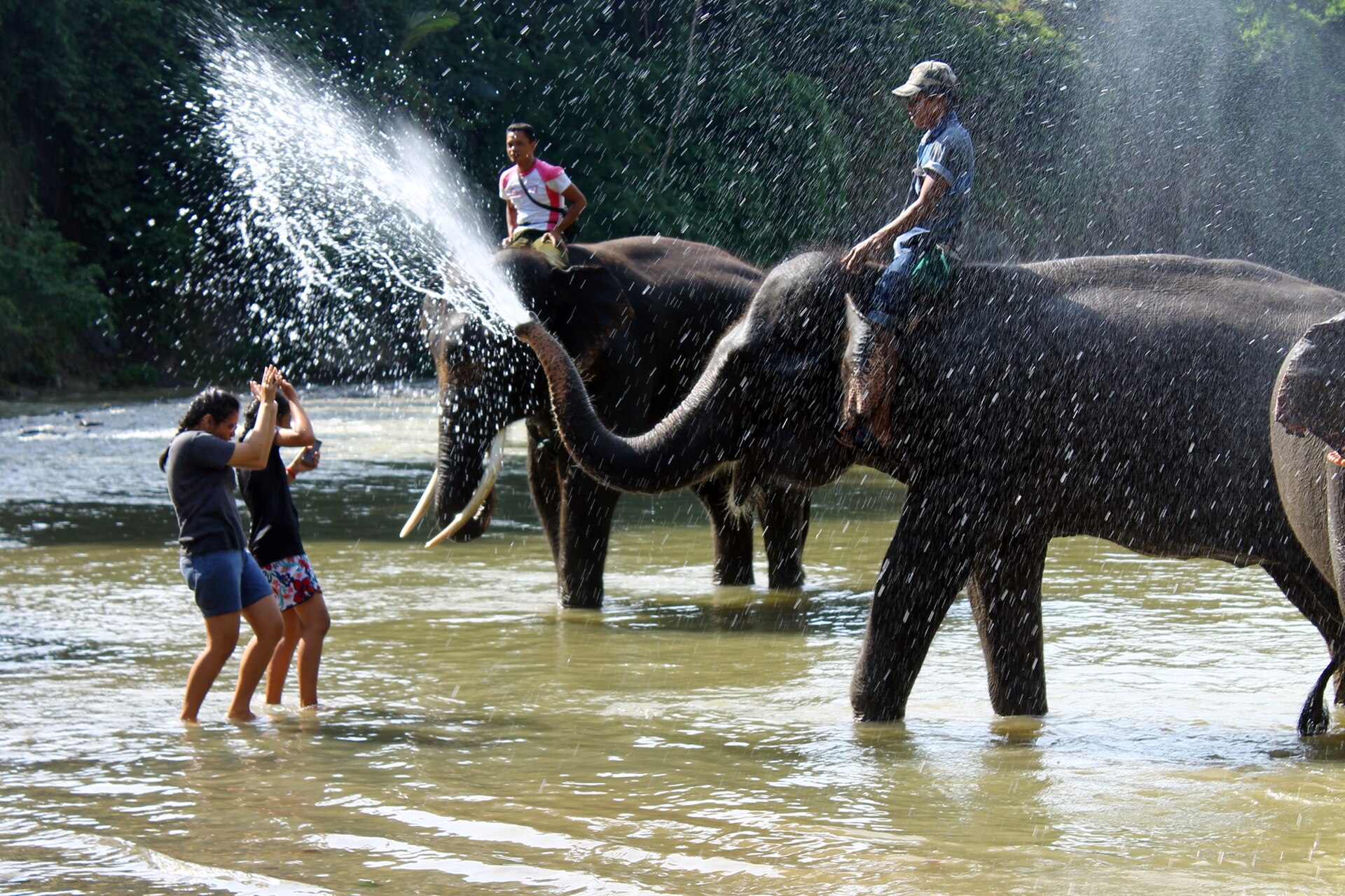
Animal welfare deserves particular attention. Any experience that involves touching, riding or posing with wild animals deserves scepticism, however natural the setting looks. Do your own homework on local wildlife and on the cultures you will meet, rather than expecting residents to educate you.
Before booking, read what an operator publishes about its conservation contributions, ask for specifics, and look for independent certification where it exists. A provider that welcomes hard questions is usually the one worth your money.
Related reading
- Community-Based Tourism in Peru’s Sacred Valley: Who Actually Benefits
- Whale Watching Done Right: Distances, Boats and the Guidelines That Matter
Sources
- What Is Ecotourism & Why Is It Important (veggiewayfarer.com, accessed 2026-11-03)
- The Pros and Cons of Ecotourism (worldtrips.com, accessed 2026-11-03)
- What ecotourism is and why it *must* include protecting … (worldanimalprotection.org, accessed 2026-11-03)
- What is Ecotourism (floridasee.org, accessed 2026-11-03)
- Ecotourism — Wikipédia (en.wikipedia.org, accessed 2026-11-03)
Photo: Befriend the Sumatran Elephant, by Panyahatan Siregar, CC BY-SA 4.0 (Wikimedia Commons)

Read next: Environmental Impacts of Tourism: What Travellers Should Know Before Choosing a Trip