
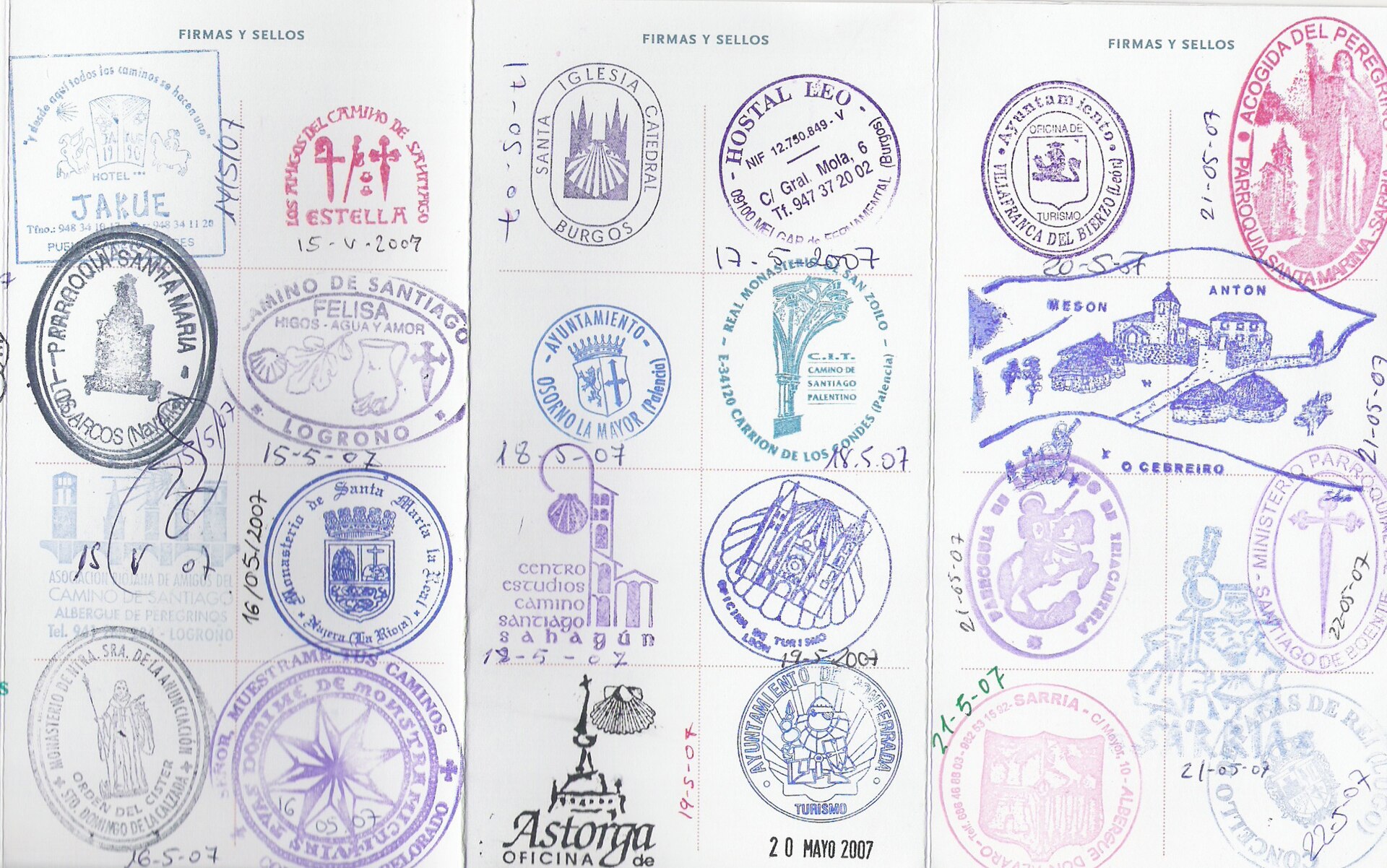
My pack weighed 6.1 kilograms on the bathroom scale the night before I left, water bottle empty, and I was oddly proud of it. Eleven days later, on the granite in front of the cathedral in Santiago, it weighed about the same, and I had stopped thinking about it at all, which was the point. This is a piece about walking the last 300 kilometres of the Camino Frances, from Leon to Santiago de Compostela, with very little, and about what carrying less did and did not do for the walk.
What was in the pack
Two sets of walking clothes, one of which I was wearing. One warm layer, a rain jacket, a hat. Sandals for evenings. A sleeping bag liner rather than a bag, because the albergues along the Camino Frances all have blankets or are warm enough without. A tiny toiletries bag with a bar of soap that did for body, hair and laundry. A phone, a charger, a paper credential, a bank card, a small first aid kit that was mostly blister plasters. No book, no camera, no spare shoes, no towel except a small microfibre square. The 6.1 kilograms included the pack itself, which was 700 grams.
I did not buy anything new for this. I want to say that early because the ultralight world can quietly become a shopping list, and buying 800 euros of gear to save two kilograms is its own kind of footprint. Everything came from a cupboard or a friend, and the shoes were trail runners with 400 kilometres already on them.
The walk itself
From Leon the route crosses the last of the meseta, flat and open, with poplar lines and canals and long straight tracks where the horizon does not seem to move. Then Astorga and the climb into the Montes de Leon, a stone cairn at the high point where people leave a pebble from home, and the long, knee-testing descent to Ponferrada. From there the mountain again, the steep pull up to O Cebreiro, and you are in Galicia: mist, chestnut woods, cowbells, stone villages and, later, eucalyptus plantations that smell wonderful and are an ecological problem nobody on the path talks about.
I averaged around 27 kilometres a day, starting at first light and finishing by two. The light pack made the mornings easy and the afternoons possible. On the descent to Molinaseca I passed walkers with 12 and 14 kilo packs going down sideways, one step at a time. I felt for them and I also remembered being them on an earlier walk.
Blisters came anyway. Weight helps but does not save you from wet socks on day six. The plasters were the most-used item in the pack.
What it cost
The Camino is cheap by European standards if you use the network built for it. Municipal and parish albergues along the Frances charge 8 to 12 euros for a bunk, sometimes by donation. Private albergues are 12 to 20 euros and usually have better showers and fewer snorers, though not by much. A pilgrim menu, three courses with wine and bread, is 10 to 15 euros almost everywhere. Breakfast is a coffee and a slice of tortilla for 3 or 4 euros.
My eleven days came to about 420 euros including a night in a cheap hotel in Santiago at the end, which is roughly 38 euros a day. It could be done for 30 by cooking in albergue kitchens and staying municipal every night; it could be 80 or more with private rooms and restaurant dinners. The train from Madrid to Leon was 30 euros and Santiago back to Madrid was about 45, both booked two weeks out.
The part where the small pack stops mattering
Somewhere after Sarria, the last 100 kilometres, the path changes. That is the minimum distance for the certificate, and the numbers on the trail go from dozens a day to hundreds. Tour groups with luggage transfer, day packs, matching t-shirts. Bars every two kilometres. The path is beautifully maintained and never in doubt, and it stopped feeling like walking across a country and started feeling like a procession.
I had thought a light pack was an environmental choice, and in a small way it is: less stuff, less bought, less thrown away. But walking beside people who had their bags driven ahead in a van each day, it was clear that the pack on my back was not what made the difference. The vans were. The luggage transfer economy along the last 100 kilometres runs on diesel, hundreds of bags a day, and it is what makes the Camino accessible to people who could not otherwise carry anything. I do not think it should be banned. I do think it is a bigger part of the walk’s footprint than any choice I made about socks.
The honest doubt is bigger than that. Walking is close to zero impact. Getting to the start of the walk is not, and most people I met had flown in. My train from Madrid was the low-impact part of the trip; the walk was just the enjoyable part. Calling the Camino sustainable because it is on foot is skipping the arithmetic.
Practical takeaways
- Aim for 6 to 8 kilograms including the pack and use what you own; a liner instead of a sleeping bag saves a kilo on the Frances from spring to autumn.
- Budget 30 to 45 euros a day in albergues with pilgrim menus, more if you want a private room every few nights.
- Start from Leon or further back if you can. The last 100 kilometres are the busiest and least quiet; the meseta and the Montes de Leon are the reason to walk.
- Take the train to the start. Madrid to Leon is 30 to 50 euros and two and a half hours; it removes the biggest single impact of the whole trip.
- Carry your own bag or accept what the vans mean. Luggage transfer is 5 to 8 euros a stage, convenient, and the least talked-about emission on the trail.
Arriving with nothing much
In the square in Santiago I sat down with my back against a column and my pack in my lap and realised I had not once, in eleven days, wished for something I had left behind. That is a rare feeling. Most travel is organised around having things available in case. Walking with six kilograms taught me how much of that is fear rather than need, and the lesson has outlasted the walk. It did not make the Camino green. It made me lighter, and I will settle for that.