

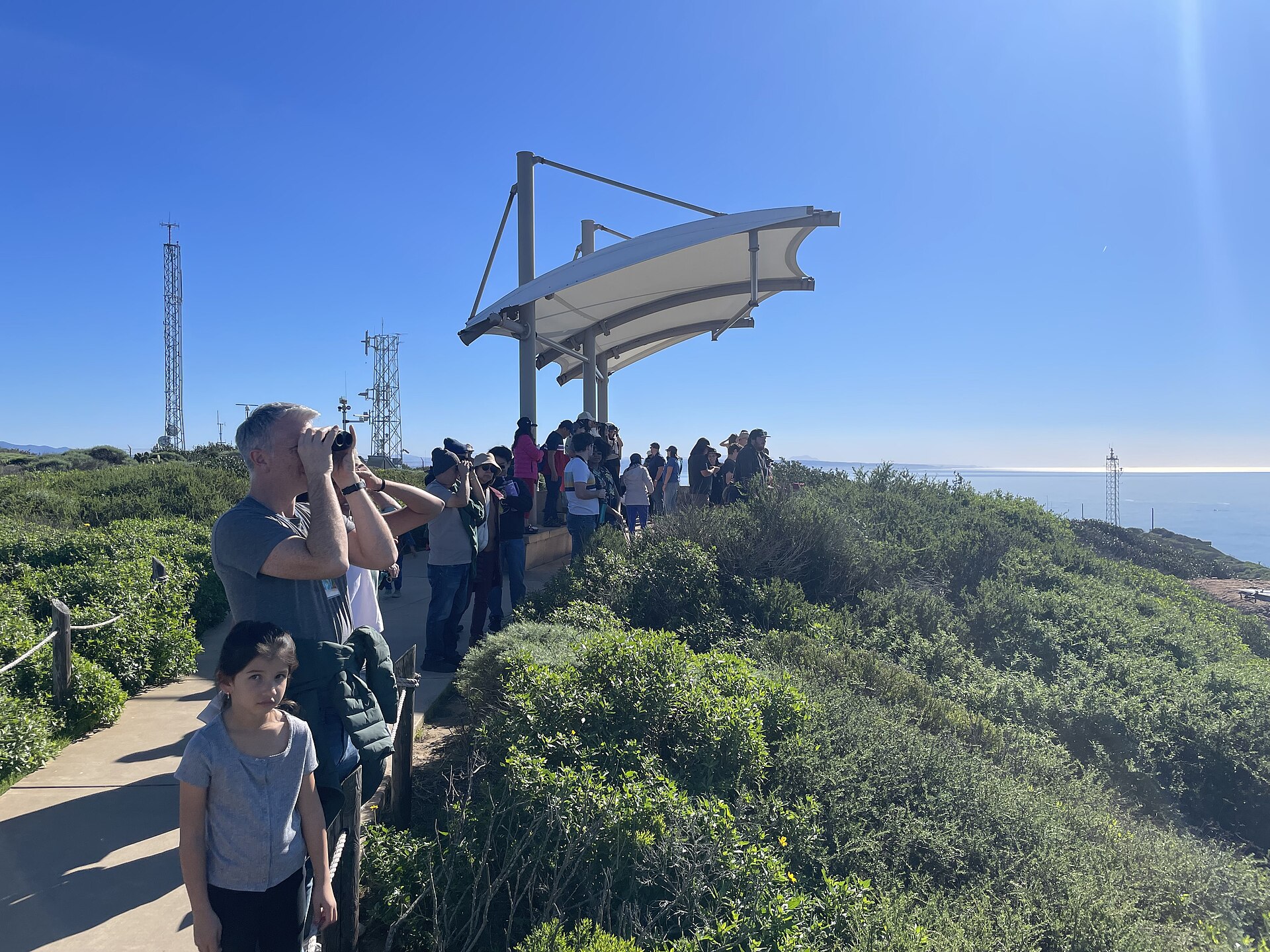
Whale watching is often held up as the good kind of wildlife tourism: the animals are not captured, the boats are small, and the industry gives coastal communities a reason to keep whales alive rather than hunt them. Much of that is true. It is also true that boats crowding a mother and calf, engines revving to reposition for a photo, and operators promising guaranteed sightings in the middle of a feeding season have measurable effects on the animals. The difference between the two is not the marketing. It is the distance, the approach, the boat, and whether the operator follows the guidelines that exist almost everywhere whales are watched commercially.
Why distance matters more than the brochure admits
Whales use sound to communicate, to navigate and, for some species, to hunt. Engine noise interferes with all three. Research on several species has shown that repeated close approaches cause animals to dive longer, change direction, spend less time feeding and resting, and, in resident populations that are watched daily, show long-term changes in energy budgets. A single boat approaching once is a small disturbance. Fifteen boats a day, every day of a season, is a different thing.
That is why nearly every country with an established industry has approach guidelines, and why the stricter ones are written as regulations rather than advice. The specifics vary, but the shape is consistent enough that you can check any operator against it.
- Minimum approach distance: typically 100 metres for most whales, extended to 200 or 300 metres for mothers with calves, for endangered species, or in specific protected waters. Some regions require 400 metres or more for particular populations.
- Approach angle: from the side and slightly behind, never head-on, never from directly astern, and never cutting across the animal’s path.
- Speed: slow, no-wake speed within several hundred metres, and no sudden changes of course or throttle.
- Time limits: a maximum time with any one group, often 15 to 30 minutes, and then leave.
- Boat limits: a cap on the number of vessels around one group at a time, commonly three, with others waiting outside a wider radius.
- No chasing, no swimming, no feeding. The animal decides whether to approach the boat; the boat does not decide.
The boat itself
The vessel shapes both the experience and the impact. Large catamarans carrying a hundred passengers are stable and cheap per seat, but they carry a lot of noise and a strong commercial pressure to deliver. Rigid inflatables are fast and exciting and get close, which is exactly the problem; they also offer the least shelter and produce the most seasick passengers. Sailing boats and small motor vessels with the engine cut are the quietest option and often the best experience, at the cost of range and speed.
What to look at when you compare operators:
- Engine and propulsion. Some operators have moved to hybrid or electric drives or to sail, and will say so. Modern four-stroke or diesel engines with proper mufflers are quieter than old two-strokes.
- Passenger numbers. Fewer people per boat means less pressure to get closer for the people at the back, and a skipper who can hear the guide over the deck. Twelve is a good number; sixty is a floating grandstand.
- A naturalist on board. A trained guide who talks about behaviour and identification, records sightings for a research programme and explains why the boat is staying where it is. Many good operators contribute sighting data to regional photo-identification catalogues.
- Land-based alternatives. In some places, headlands and cliffs give better whale watching than any boat, with no impact at all. A good operator will tell you where.
Certifications and what they cover
There is no single global whale-watching certification, but there are recognised responsible-operator schemes run by conservation organisations, and regional accreditation programmes that audit operators against the approach rules above. Membership is voluntary and audits are not always frequent, but a listed operator has at least agreed to the rules in writing. Look for the scheme’s name on the website and check the scheme’s own list rather than trusting the logo on the boat.
Some regions run their own licensing, with a limited number of permits and mandatory guide training. Where that exists, an unlicensed boat is a warning sign regardless of price, and the local harbour office will usually confirm who holds a permit if you ask.
Prices, seasons and the guarantee problem
A half-day trip generally runs from around 40 to 120 euros or dollars per adult depending on the region and the vessel, with small-boat and sailing trips at the upper end and large catamarans at the lower. Full-day and multi-day expeditions run into the hundreds. What price rarely captures is the season: whales are where the food or the breeding grounds are, and in most locations there is a well-defined window when sightings are reliable and a longer period when they are not.
Be careful with “guaranteed sighting” offers. The guarantee is usually a free second trip, which is fine, but it puts commercial pressure on the skipper to deliver on the first one. An operator who says openly that some days produce nothing is telling you something about their priorities.
Common mistakes as a passenger
- Asking the skipper to get closer. The people on the bridge respond to pressure from the deck. Do not add to it.
- Judging a trip by the photos. A long lens from 100 metres produces excellent images; a phone from 20 metres produces a disturbed animal.
- Booking on the dock without checking the operator. Ten minutes on a website will tell you whether the guidelines are mentioned at all.
- Swim-with programmes. A few places permit them under tight rules; most in-water encounters marketed to tourists are not among them.
The honest trade-off
A well-run whale-watching industry is one of the few things that makes a live whale worth more to a coastal town than a dead one, and it funds research and public support for protection that would not exist otherwise. It is still an intrusion. The way to keep it on the right side of the line is to choose operators who keep their distance, and to be the kind of passenger who is happy when they do.