
Tourism shapes the places it depends on, and not always kindly. This guide sets out the main ways travel affects the environment, how the damage comes back to hurt destinations, and how you can use that knowledge to pick a trip with a lighter footprint.
- The biggest pressures come from transport emissions, strain on ecosystems and the spread of non-native species.
- Climate change also works in reverse, shortening ski seasons and killing reefs that visitors come to see.
- Your choices of transport, destination and accommodation are the levers you actually control.
Why does tourism affect the environment so much?
Tourism moves people, and moving people takes energy, land and water. Every trip involves transport, somewhere to sleep, food, and activities that put visitors in contact with ecosystems. Added together, these demands can push a place past what it can absorb.
Many sources use the term carrying capacity for that limit. Once vegetation, wildlife, mountains, coasts and water resources are used more heavily than they can recover from, the damage starts to compound. Overview material on the subject also notes that tourist destinations and attractions in wild areas may neglect environmental concerns in order to satisfy visitor demand, which leads to problems such as pollution and deforestation.
It is worth being fair about the picture, though. Tourism can raise awareness of environmental issues, and nature-based travel can give people a reason to protect a landscape. The overall balance, according to the general literature, still leans negative. That is why the details of how and where you travel matter.
How does tourism harm biodiversity?
Nature tourism is closely tied to biodiversity, because a rich and varied environment is the attraction. That creates an uncomfortable loop: when too many visitors strain land and resources, biodiversity declines, and a decline in biodiversity means a loss of tourism potential.
Pressure shows up in several forms:
- Trampled vegetation and disturbed wildlife in popular natural areas.
- Strain on mountain, marine and coastal environments and on local water resources.
- Reduced ecosystem productivity, which shrinks the goods and services nature provides.
- Weaker resilience, so ecosystems cope less well with floods, droughts, hurricanes, pollution and climate stress.
Invasive species travel with people
Visitors and suppliers can bring in insects, wild and cultivated plants and diseases that are not native to the area, often without realising it. Non-native species can cause enormous disruption to local ecosystems.
The practical lesson is simple. Clean boots, bags and gear before moving between natural areas, and follow any biosecurity rules at protected sites. Do not carry plants, seeds or soil from one place to another.
What is the link between tourism, the ozone layer and the climate?
Two global issues are tied to the industry: damage to the ozone layer and the build-up of greenhouse gases.
The ozone layer
The ozone layer sits in the stratosphere, at an altitude of 12 to 50 kilometres, and absorbs the harmful wavelengths of the sun’s ultraviolet radiation. Ozone-depleting substances such as CFCs and halons have contributed to its destruction. Hotels and the wider tourism sector use equipment that can contain them, including refrigerators, air conditioners and aerosol propellants, and emissions from jet aircraft are also a significant source. The effects begin with the construction of new developments and continue through daily operations.
If you are comparing accommodation, it is reasonable to ask what refrigerants and cooling systems a property uses, and whether it has phased out ozone-depleting substances. UNEP has published guidance for hotels and other businesses on doing exactly that.
Greenhouse gases
Carbon dioxide is one of the most significant greenhouse gases, produced when coal, oil and natural gas are burned and when land use changes, for example through deforestation. Tourism involves moving people away from home, and it accounts for a substantial share of traffic movements globally. It credits rapidly expanding air traffic with about 2.5% of CO2 production, and describes passenger jets as among the fastest growing sources of greenhouse gas emissions.
Note that these figures come from an older overview, and the percentages should be treated as indicative of the pattern rather than as current measurements.
How do environmental problems come back to hit tourism?
The damage is not one-way. Environmental change undermines the very attractions that draw visitors, and that affects both destinations and the people who plan trips to them.
Disasters and disease
Floods, earthquakes, wildfires, volcanoes, avalanches, drought and disease can all hurt inbound and domestic tourism. The 2001 foot and mouth epidemic in England is a documented example. Contemporary reporting indicated that hotels across England, Scotland and Wales were significantly affected by the outbreak, with many expecting business to decline.
Climate change
Tourism contributes to climate change and is affected by it. The source material lists several likely consequences:
- More frequent and severe storms and weather events in affected regions.
- Shorter skiing seasons in the Alpine region because of less snowfall.
- Visitors staying away from already hot areas such as Asia and the Mediterranean because of heat and fear of disease.
- Harm to vulnerable ecosystems such as rainforests and coral reefs, from rising temperatures and less rainfall.
Why coral bleaching matters
Coral bleaching happens when coral is stressed by higher temperatures, unusual salinity, poorer water quality or more suspended sediment. The single-celled algae that give coral its colour leave, the coral turns white, and it rapidly dies. If a reef is the reason for your trip, check its current condition before you book rather than relying on older photographs.
Who bears the costs, and what about the economic side?
Environmental impacts do not sit in isolation. Tourism brings real economic benefits: jobs, higher incomes, restored historic sites and new markets for local businesses. International tourist arrivals and the receipts they generate have reached record levels in recent years, bringing substantial economic weight to many countries.
Those gains are not guaranteed or evenly shared. Tourism jobs are often seasonal and low-paid, and prices can rise in high season beyond what residents can afford. As visitor numbers grow, resources can become exhausted and a destination’s carrying capacity can be depleted. A recurring warning in the literature is that by the time negative effects are obvious, it is often too late to impose restrictions.
For you as a traveller, this means that a crowded, overextended destination is a poor bet on both counts. The experience tends to degrade, and your spending may reach fewer local people than you would hope. Favouring places that manage visitor numbers, and businesses that employ and buy locally, is a sound way to act on that.
What can you do when choosing a trip?
You cannot remove the impacts of travel, but you can reduce them and steer money towards places handling them well. These are the decisions that count most, in rough order of effect.
- Look at transport first. Because aviation is such a fast-growing source of emissions, the number and length of flights you take matters more than almost any choice you make on the ground. Fewer, longer trips and overland options where practical both help.
- Choose destinations that are not under strain. Consider shoulder seasons, lesser-visited areas, and places that cap or manage visitor numbers.
- Check the condition of the attraction. For reefs, ski areas and fragile habitats, find out how climate and local pressure are affecting them now.
- Ask about cooling and refrigeration. Accommodation that has moved away from ozone-depleting substances is doing something concrete, beyond a green label.
- Follow biosecurity and access rules. Stay on marked paths, keep distance from wildlife, and do not move plants, seeds or soil between sites.
- Spend locally. Locally owned lodging, guides and food keep more of the benefit in the community and reduce the incentive to overbuild.
None of these requires giving up travel. They require treating the environmental cost as part of the price of a trip, in the same way you would weigh cost and time, and choosing the option that leaves the place in better shape for the next visitor.
Related reading
- Community-Based Tourism in Peru’s Sacred Valley: Who Actually Benefits
- Plan Your Next Low-Impact Journey
Sources
- Environmental Impacts of Tourism (gdrc.org, accessed 2026-11-09)
- Impacts of tourism — Wikipédia (en.wikipedia.org, accessed 2026-11-09)
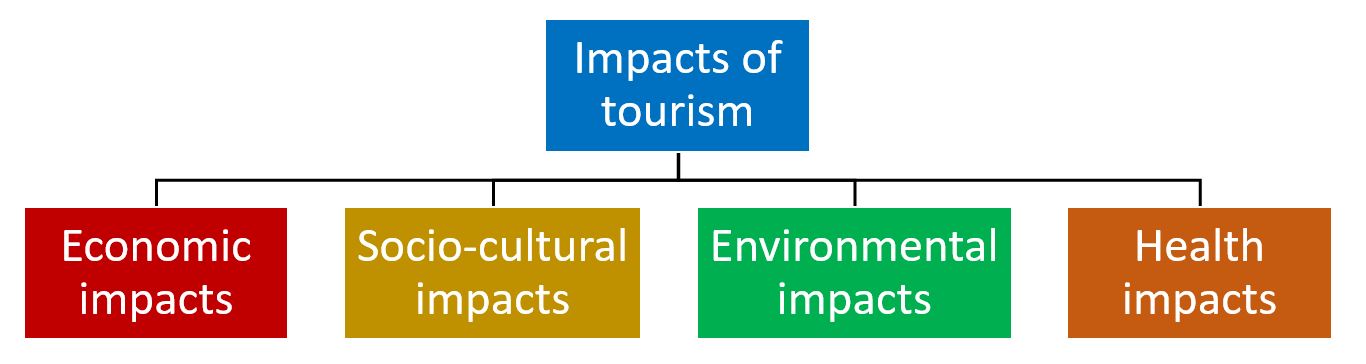
Photo: Impacts of tourism, by Volga2018, CC BY-SA 4.0 (Wikimedia Commons)
