
Spending money on a trip that carries a nature label does not automatically help nature. The word “ecotourism” is now attached to almost anything outdoors, so supporting it well means checking what a trip actually does. This guide gives you a working test and a set of actions you can take before, during and after you travel.
- Check the trip against the core principles of ecotourism: low impact, money for conservation, benefits for local people.
- Ask operators concrete questions about wildlife, waste and local hiring before you pay.
- Spread your spending so that more of it stays with the community you visit.
What does genuine ecotourism actually require?
Before you can support something, you need a yardstick. One widely used definition frames ecotourism as travel to natural places done with care: it keeps harm low, puts money directly into protecting the environment, gives local people a real benefit, and teaches visitors to respect both nature and culture. That framing draws on the shared standards of several major international bodies, including TIES, IUCN, GEN and UN Tourism.
The point worth holding on to is that being in nature is not enough. The same source warns that the term has become a buzzword applied to trips that disturb wildlife, damage habitats or exploit local cultures, and that this kind of greenwashing hides harmful practice.
Turn the definition into a short checklist you can apply to any trip you are considering:
- Does the trip reduce its footprint, including pollution, waste and disturbance to animals?
- Does it protect cultural integrity and give residents a say in how tourism runs?
- Does some of your money fund conservation, for example through park fees or guided experiences?
- Does it create real income and decent jobs for people who live there?
- Are Indigenous and local communities treated as partners rather than as scenery?
If an operator cannot answer yes to most of these in specific terms, treat the label with caution.
How do you check an operator before you book?
Marketing language is cheap, so look for things that can be verified. Start with the operator’s own website: a company that takes responsible travel seriously tends to explain its policies in plain terms, including how it works with local partners and what it asks of guests. Some operators publish a self-assessment of each trip, which lets you compare what they claim with what you are being sold.
Then send a few direct questions by email. Their answers, and how quickly and specifically they give them, tell you a great deal.
- Wildlife: Are guests told to watch animals from a distance, and is touching or feeding forbidden? Operators who work with nature reserves are advised to discourage any interaction with wild animals.
- Waste: What do they do about single-use plastics and paper items, and how is rubbish handled on trips and in the office?
- Staffing: Do they hire people from the area, and do all employees receive fair pay?
- Suppliers: Do they buy food and services from local producers?
- Partners: Which local organizations or communities do they work with, and what do those partners get?
Vague replies, or a reply that simply repeats a slogan, are a signal. Specific answers about named practices are what you want. Third-party certification can add a layer of assurance, but treat it as one input and still ask the questions above, because a logo does not tell you how a particular trip is run.
Where should your money go once you arrive?
Tourism has a well-documented leakage problem. According to one operator guide, only a small portion of what tourists spend on a holiday ends up in the pockets of local people. That is the gap you can narrow with your own choices.
The same guide points to three levers that operators use, and each has a traveller-side equivalent:
- Employing local people. Pick lodging and guides where the staff come from the area. Ask who works there and where they live, and prefer places that can answer plainly.
- Buying from local suppliers. Eat where the ingredients are sourced nearby. Local produce also travels shorter distances, which lowers the emissions attached to your meals.
- Broadening the itinerary. If everyone crowds the same famous sites, funding stays concentrated. Visiting nearby towns or less-visited areas spreads income to people who would otherwise see little of it.
Local-led activities are another direct route: walking tours, diving trips, cooking classes and nature tours run by residents put money and decision-making in local hands. When you have a choice between a resort shop and a village market, or between a packaged excursion and a local guide, the second option usually keeps more value in the community. Where there is a visitor fee for a park or reserve, paying it without complaint is itself a form of support, since these fees are one of the ways ecotourism generates conservation funding.
Why do timing, crowds and trip length matter?
Many of the most visited natural places are also among the most fragile. Rainforests that shelter endangered species and coral reefs stressed by warming seas cannot absorb unlimited visitors. The source material is clear that well-managed tourism can benefit nature and communities, while unchecked growth leads to overcrowding, pollution, habitat damage and resource strain.
You cannot control a destination’s carrying capacity, but you can shape how much pressure your own trip adds:
- Avoid the crush. Travelling outside the busiest period eases pressure on trails, reefs and local services. Some city programmes explicitly try to encourage demand across the whole year rather than in short peaks, because it spreads income and reduces strain.
- Stay longer in fewer places. Some destinations suffer from very short visits, with travellers passing through quickly and leaving little behind. A longer stay with overnight accommodation supports local businesses more than a rushed stop.
- Favour small groups. Fewer people at one time generally means less trampling, less noise and less disturbance to animals. Ask an operator how many guests they take at once and whether they limit numbers in sensitive spots.
- Look beyond the headline site. Visiting lesser-known areas, or the nearby town rather than only the famous attraction, relieves pressure on the hotspot.
Ask the operator or local park office what the sensitive seasons are, such as breeding periods, and respect any closures or limits. Rules like these exist because the place needs recovery time.
How do you weigh the carbon cost of getting there?
The impact of a trip does not start at the park gate. Transport usually dominates the footprint of a nature holiday, so the choice of how you travel is part of whether your trip supports conservation or undercuts it.
You do not need precise figures to make a sensible decision. Use this order of thinking:
- Distance first. The farther you go, the more you should ask whether the benefit to the destination justifies the journey. A longer stay can make a long trip more defensible than several short ones.
- Mode second. Where a rail or other lower-emission option exists, it is worth considering even if it takes more time.
- On the ground. Walking, cycling and shared transport reduce impact at the destination. Local produce and local suppliers also cut emissions linked to food and supplies.
- Compensation last. If you offset, treat it as a supplement to reducing emissions, not a replacement, and check the provider’s claims carefully.
A simple way to compare two destinations is to list the transport legs for each, then compare how many separate flights or long transfers you would need. Fewer, longer stays almost always come out better than many quick hops. If you cannot find reliable numbers for a route, say so and choose the option that is plainly lighter rather than guessing at a figure.
What can you do after the trip to keep supporting it?
Support does not end when you return. Ecotourism relies on visitors who understand why a place needs protecting, and that understanding is something you can pass on.
- Share specifics. When you recommend a guide, lodge or operator, say what they did well: how they handled wildlife, who they employed, where the food came from. Specific praise rewards good practice and helps others choose well.
- Give feedback. If something fell short, tell the operator directly. Good businesses use this to improve.
- Stay sceptical in public. If you see a trip described as eco-friendly that involves hunting, fishing as a tourist attraction, or close contact with wild animals, you are right to doubt the claim. Such activities are not what ecotourism stands for.
- Back the people, not just the place. Indigenous peoples make up a small share of the global population yet steward a large part of the world’s key biodiversity areas, so trips that treat them as equal partners support some of the most effective conservation there is.
If you live in a popular destination yourself, the same principles apply at home: visitors and residents both benefit when tourism is planned with local input, with public amenities that serve everyone and awareness of the downsides as well as the benefits.
The best way to support ecotourism comes down to a few repeatable habits: define what you want, ask specific questions, route your money to local people, reduce the pressure you add, and be honest about the travel footprint. None of these needs a certificate or a special budget, only attention before you book.
Related reading
- Costa Rica Ecolodges: How to Tell the Real Ones From the Marketing
- Whale Watching Done Right: Distances, Boats and the Guidelines That Matter
Sources
- What Is Ecotourism? Definition and Core Principles (sustainabletravel.org, accessed 2026-11-09)
- Building a Sustainable Travel Industry (rebeccaadventuretravel.com, accessed 2026-11-09)
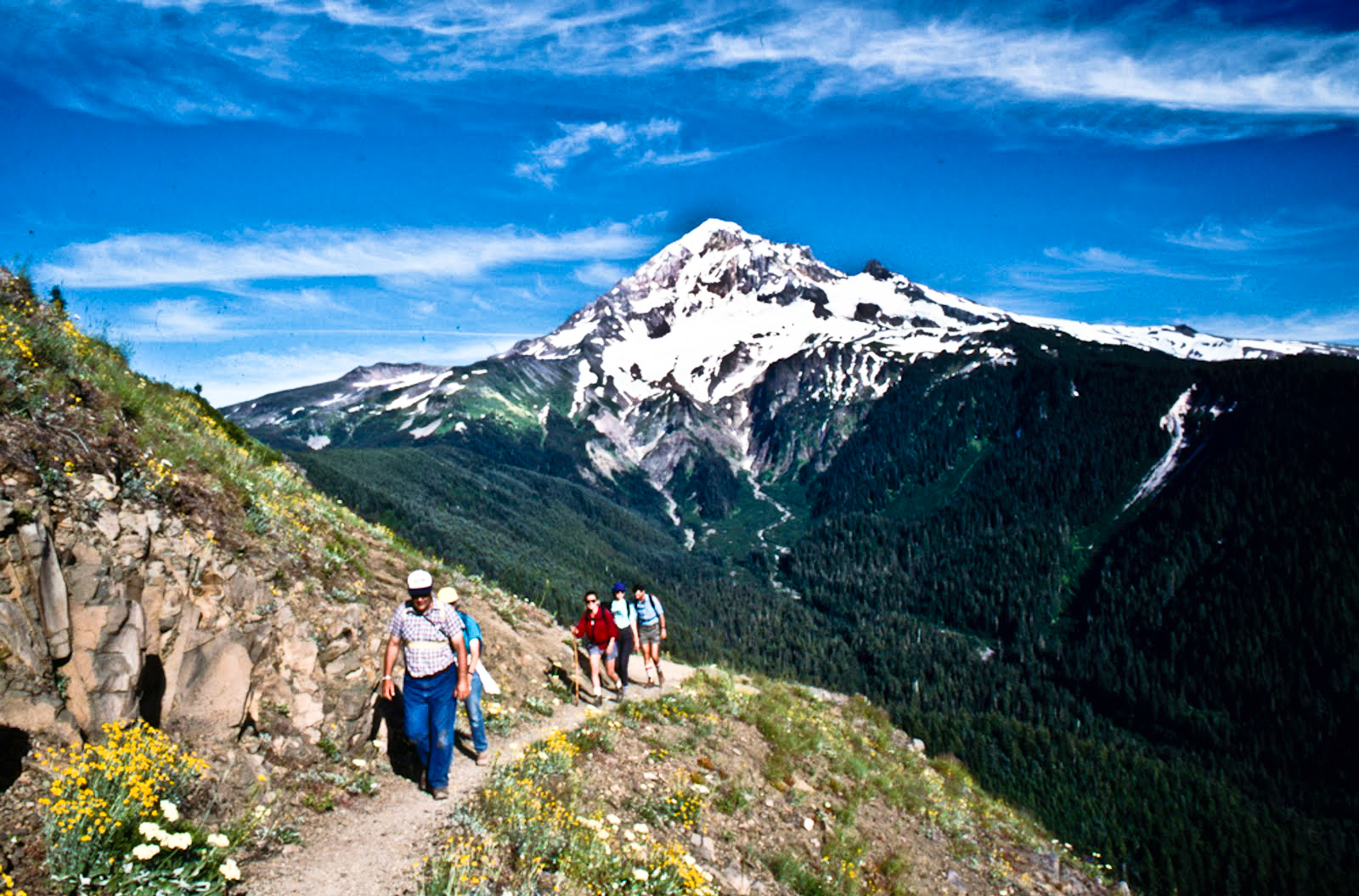
Photo: HIKING ON BALD MOUNTAIN TRAIL MT HOOD (25005236642), by U.S. Forest Service- Pacific Northwest Region, Public domain (Wikimedia Commons)
